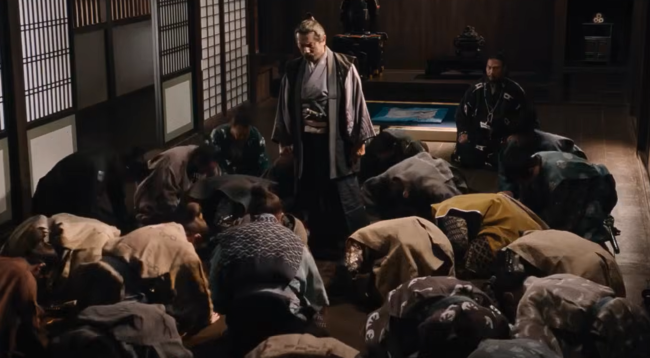
The Samurai and the Prisoner (Kokurojo) is the result of Kiyoshi Kurosawa’s relentless never-say-die attitude, arriving after the filmmaker released three 2024 films — Chime, Serpent’s Path, and Cloud — three features from completely different genres that highlighted his remarkable genre fluidity.
The Cannes Film Festival has celebrated Kiyoshi Kurosawa’s cinema for decades, beginning with his first nomination in 1999 for Charisma. Since then, his films have received 10 nominations and won three awards for Journey to the Shore (2015), Tokyo Sonata (2008), and Pulse (2001).
This samurai saga is based on the novel of the same name by Honobu Yonezawa. Set in 16th-century Japan, the story follows Araki Murashige, a samurai who served Oda Nobunaga, as he faces mysterious crimes while trapped inside his besieged castle. In desperation, Murashige turns to Kuroda Kanbei — the very man he once cast into a dungeon.
Kiyoshi Kurosawa’s first theatrical feature was Kandagawa Pervert Wars (1983), originally titled Kandagawa Inran Sensō, a film far removed from the mainstream thrillers and psychological horror works that later defined his career. Now, with The Samurai and the Prisoner, Kurosawa steps into the world of chanbara filmmaking for the very first time.
Cannes Film Festival – Kiyoshi Kurosawa Awards & Nominations
- 1999 — Charisma
• Nominee — C.I.C.A.E. Award
• Nominee — SACD Prize (Directors’ Fortnight) - 2001 — Pulse
• Winner — FIPRESCI Prize (Un Certain Regard)
• Nominee — Un Certain Regard Award - 2003 — Bright Future
• Nominee — Palme d’Or - 2008 — Tokyo Sonata
• Winner — Un Certain Regard Jury Prize
• Nominee — Un Certain Regard Award - 2015 — Journey to the Shore
• Winner — Un Certain Regard Directing Prize
• Nominee — Un Certain Regard Award - 2017 — Before We Vanish
• Nominee — Un Certain Regard Award